 https://www.everydaycheapskate.com/wp-content/uploads/20260607-hamburger-patties-on-hot-grill-how-to-clean-a-bbq-grill-without-using-a-metal-brush.png
800
1200
Mary Hunt
https://www.everydaycheapskate.com/wp-content/uploads/EC-Logo-by-Mary-Hunt-Tagline-Trimmed.png
Mary Hunt2026-06-07 16:44:022026-06-07 16:44:025 No-Brush Ways to Clean Your Grill (Using Stuff You Already Have)
https://www.everydaycheapskate.com/wp-content/uploads/20260607-hamburger-patties-on-hot-grill-how-to-clean-a-bbq-grill-without-using-a-metal-brush.png
800
1200
Mary Hunt
https://www.everydaycheapskate.com/wp-content/uploads/EC-Logo-by-Mary-Hunt-Tagline-Trimmed.png
Mary Hunt2026-06-07 16:44:022026-06-07 16:44:025 No-Brush Ways to Clean Your Grill (Using Stuff You Already Have)Ask Me Anything: Rust Stains, HE Washer, Stained Concrete, More
shieldMary Hunt
calendar_todaySep 20, 2021
updateUpdated Jun 15, 2026
schedule11 min read
verifiedFact-checked

Every day when I open my virtual mailbag, I find dozens, if not hundreds, of questions from the audience. Want to know the most-asked-about subject? Stains. Nasty, ugly, stubborn stains on everything you can imagine from concrete to laundry, and teeth, too.
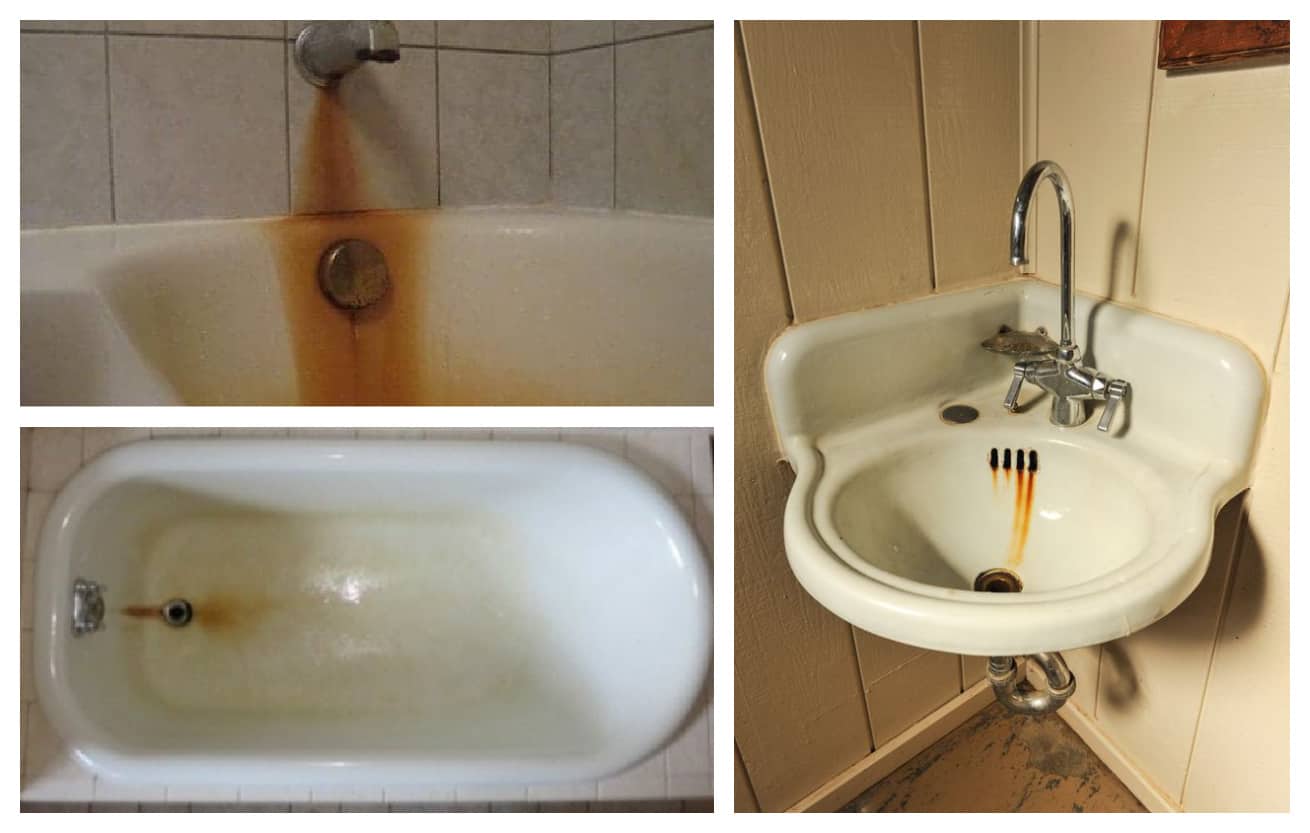
Rust Stains on Bathtub
Dear Mary: Our water is very hard and as a result has created rust-colored stains in the bathtub. I’ve tried to scrub it away with Comet, but that did nothing. How can I remove these terrible stains? MaryAnne
Dear MaryAnne: Does your tub look similar to anything pictured above? If so, you have several options, starting with pantry items and then specific commercial products you may have already:
Baking soda and vinegar
In a small bowl, make a thick paste of baking soda and white vinegar. Apply to the stain and allow that to sit for a few hours. Before rinsing, rub the stained area with a stiff scrubber like a non-scratch blue Scotch-Brite scouring pad. Rinse.
Is the stain still visible? Move on to the next option.
Mr. Clean Magic Eraser
Some readers have reported success removing rust stains with a damp Mr. Clean Magic Eraser. If you have one handy, give that a try. And if it’s not as successful as you’d like, keeping going.
Bar Keepers Friend
Bar Keepers Friend (supermarket or online) is a wonderful cleanser that removes all kinds of stains from pots and pans, bakeware, stainless steel, and more. The active ingredients are is oxalic acid and citric acid, which together solve the rust stain problem in many situations. No BKF handy? No worries.
Toilet bowl cleaner
If the stain remains, take a look to see if you happen to have this specific product under the sink— Lysol Professional Toilet Bowl Cleaner. Never dreamed you’d be using toilet bowl cleaner in the tub, right?
Cover the stain and allow to sit for an hour or so. Give it a good scrub, and rinse. I am reasonably confident the toilet bowl cleaner, provided you have it already, wlll take those stains away, that’s how well it works to clean fiberglass, acrylic, and porcelain.
If you don’t have this toilet bowl cleaner already, one more option:
Iron-out
If you’re heading out to buy a quality product to treat this problem, I suggest you go straight for the big gun in rust stain removers, Iron Out. It’s cheaper than the Lysol option, works like a dream on iron stains, and unlike other commercial rust removers, it contains no harsh or abrasive chemicals. Iron Out works really well to remove rust stains from just about anything, including fabric.
Spray Iron-Out directly on the rust stain. Allow to stand for a few seconds. Wipe with a damp sponge or cloth. Rinse immediately and thoroughly. Repeat as necessary.
Good luck and be sure to let us know how this works for you.
Front Loading Washing Machine
Dear Mary: I was wondering if you have another option to clean front loading machines rather than the smelly Tide Washing Machine Cleaner? When my husband uses that, our whole house smells like chemicals for a week. Do you have a homemade recipe that would work to clean the drum? Robyn
Dear Robyn: I have never tried the Tide product you mention, but I’ll take your word for it. Before I give you my best response, promise me you will weigh this against the owner’s manual that came with your washer. I don’t want you to do anything that might invalidate your warranty.
How to Clean Front-Loading Washer
This is a multi-step process, which should be performed monthly.
- Make sure the drum of the machine is completely empty—never wash clothes while cleaning the machine. Select “Basket Clean” or “Tub Clean” on the wash settings. If your front loader does not have such a setting, select the hottest, largest, and longest load settings.
- Add 2 cups of white vinegar to the empty washer drum (or to the detergent reservoir if your machine does not have a “Basket Clean” or “Tub Clean” cycle). This is going to help get rid of the odors and hard water minerals that have accumulated inside the machine and hoses. Allow the machine to run through an entire wash and rinse cycle.
- Set the washer a second time on the same cycles as above—“Tub Clean,” or “Basket Clean,” or the hottest, largest and longest cycles. Pour 2 cups of liquid chlorine bleach into the empty washer drum. This is going to kill germs and bacteria that have accumulated inside the machine. Allow the machine to run through another entire wash and rinse cycle.
- Run a third cycle on the same cycle without adding anything to the empty washer drum. This will remove and rinse away any remaining residue.
- Fill a bucket with a solution of 1/4 cup liquid chlorine bleach and 1-quart water. Dip a clean rag into the solution, ring it out. Pull back the rubber seal around the washer door, looking for mildew and other deposits. Clean this area well with the rag or scrub brush, rinsing it as needed in the bucket. Follow with a clean, dry cloth to remove any remaining moisture from the seal area.
CAUTION
Never mix bleach and vinegar. Ever. Together they produce harmful, toxic gas. The cleaning process above provides for these substances to go into the machine separately, followed by complete rinse cycles to clean out the reservoirs.
Help! Stained Concrete
Dear Mary: Five years ago we replaced our entryway steps and now the concrete has developed green/brown stains from dead, wet leaves, etc. How can we remove these stains? Rob
Dear Rob: The leaf stains are caused by tannins, the same type of compounds that are found in grapes and make wine taste “dry.” Tannin stains on outdoor concrete may not permanent, but they can be difficult to remove. Fresh stains often go away on their own, provided they are exposed to the powerful bleaching action of the sun. Fresh stains are easier to remove than older stains. Powdered detergents that contain bleaching agents that remove organic stains like food, blood and plant material can effectively clean old, stubborn stains from concrete surfaces, according to Concrete Network.
Here are the steps to follow, making sure you have placed a tarp over nearby plants to protect them from cleaning products. Always test a small, inconspicuous area of the concrete before you apply the cleaner to the stain:
- Wash leaf debris from the concrete with a power washer or hose with a strong nozzle attachment.
- Apply Cascade powdered dishwasher detergent to the stain while the concrete is still damp. Let the detergent sit for a few minutes.
- Scrub the stain with a stiff non-metal brush.
- Rinse all the soap off the concrete with the power washer.
- Add more detergent and repeat the cleaning and rinsing process if the stain is still visible.
For extremely tough stains that cannot be completely removed following the steps above, continue to the next level:
- Mix 1 cup liquid chlorine bleach with 2 gallons of water in a bucket.
- Apply the mixture to the concrete and let it sit for five minutes.7.
- Scrub the stain vigorously with the brush and rinse off the bleach mixture with a power washer.
To avoid conspicuous bleached areas, clean the entire concrete surface instead of spot-cleaning the stain. And again: Never mix chlorine bleach with anything other than water.
Dingy, Gray Whites
Dear Mary: What can I do to make my white sheets, duvet cover, towels, socks, T-shirts and even delicate items that have become yellowed or dingy gray, white again? Susan
Dear Susan: The problem of dingy gray laundry is the residue and buildup of detergent, fabric softeners, and minerals from hard water that we’re not removing with regular washing methods. Add to that the accumulation of sweat, body soil, deodorant, lotions, shampoo, conditioners, oils, and more that adhere and get stuck to the fibers of the fabric, and what do we get? Linens and clothes we think are clean but may come out with lingering odors and poor appearance.
The solution is laundry stripping—a process with astounding results! I wrote an entire post on how to do this, complete with my own embarrassing if not humiliating before and after photos. I won’t repeat it here, but suggest you head over to Dingy Gray Laundry is the Problem—This is the Solution!
Electric Toothbrush
Dear Mary: Have you evaluated electric toothbrushes? If so what are your findings? Sylvie
Dear Sylvie: I have, starting with my own dentist who believes so strongly in the effectiveness of a good electric toothbrush that he gives his patients a new brush head for their particular model, every visit. My pick for the Best Inexpensive™ electric toothbrush is the Oral-B Pro 1000.
Here’s why: It’s a great tool, works like a champ, and gets awesome reviews both from professional oral healthcare providers as well as users, like myself.
Oral-B Pro 1000 has a built-in timer so I know I have to keep going at it until it gives me an alert that I’m done but also a pulse every 30 seconds so I know when to switch areas. The replacement toothbrush head for this brush is inexpensive, which is a big deal as it must be replaced every three months, to retain its effectiveness.
This brush holds a charge for many days, making it ideal for travel. The manufacturer claims Pro 100 removes 300% more plaque than a regular manual toothbrush, and I’m a believer.
Everyday Cheapskate participates in the Amazon Services LLC Associates Program, an affiliate advertising program designed to provide a means for us to earn from qualifying purchases, at no cost to you.

More from Everyday Cheapskate
https://www.everydaycheapskate.com/wp-content/uploads/20260607-hamburger-patties-on-hot-grill-how-to-clean-a-bbq-grill-without-using-a-metal-brush.png
800
1200
Mary Hunt
https://www.everydaycheapskate.com/wp-content/uploads/EC-Logo-by-Mary-Hunt-Tagline-Trimmed.png
Mary Hunt2026-06-07 16:44:022026-06-07 16:44:025 No-Brush Ways to Clean Your Grill (Using Stuff You Already Have) https://www.everydaycheapskate.com/wp-content/uploads/20260603-keeping-laundry-white.png
800
1200
Mary Hunt
https://www.everydaycheapskate.com/wp-content/uploads/EC-Logo-by-Mary-Hunt-Tagline-Trimmed.png
Mary Hunt2026-06-03 19:14:082026-06-03 19:16:53How to Keep White Clothes Actually White (Yes, It’s Possible)
https://www.everydaycheapskate.com/wp-content/uploads/20260603-keeping-laundry-white.png
800
1200
Mary Hunt
https://www.everydaycheapskate.com/wp-content/uploads/EC-Logo-by-Mary-Hunt-Tagline-Trimmed.png
Mary Hunt2026-06-03 19:14:082026-06-03 19:16:53How to Keep White Clothes Actually White (Yes, It’s Possible) https://www.everydaycheapskate.com/wp-content/uploads/20260531-woman-cleaning-eyeglasses-with-a-microfiber-cloth-diy-lens-and-screen-cleaner-spray.png
800
1200
Mary Hunt
https://www.everydaycheapskate.com/wp-content/uploads/EC-Logo-by-Mary-Hunt-Tagline-Trimmed.png
Mary Hunt2026-05-31 14:51:082026-05-31 14:51:08Homemade Eyeglass Lens Cleaner: 3 Simple Ingredients
https://www.everydaycheapskate.com/wp-content/uploads/20260531-woman-cleaning-eyeglasses-with-a-microfiber-cloth-diy-lens-and-screen-cleaner-spray.png
800
1200
Mary Hunt
https://www.everydaycheapskate.com/wp-content/uploads/EC-Logo-by-Mary-Hunt-Tagline-Trimmed.png
Mary Hunt2026-05-31 14:51:082026-05-31 14:51:08Homemade Eyeglass Lens Cleaner: 3 Simple Ingredients https://www.everydaycheapskate.com/wp-content/uploads/20260530-bright-contemporary-kitchen-how-to-fix-a-smelly-kitchen-sink-drain.png
800
1200
Mary Hunt
https://www.everydaycheapskate.com/wp-content/uploads/EC-Logo-by-Mary-Hunt-Tagline-Trimmed.png
Mary Hunt2026-05-30 13:19:232026-05-30 13:19:23How to Get Rid of a Smelly Kitchen Sink Drain for Good
https://www.everydaycheapskate.com/wp-content/uploads/20260530-bright-contemporary-kitchen-how-to-fix-a-smelly-kitchen-sink-drain.png
800
1200
Mary Hunt
https://www.everydaycheapskate.com/wp-content/uploads/EC-Logo-by-Mary-Hunt-Tagline-Trimmed.png
Mary Hunt2026-05-30 13:19:232026-05-30 13:19:23How to Get Rid of a Smelly Kitchen Sink Drain for Good https://www.everydaycheapskate.com/wp-content/uploads/20260529-how-to-clean-outdoor-furniture.png
800
1200
Mary Hunt
https://www.everydaycheapskate.com/wp-content/uploads/EC-Logo-by-Mary-Hunt-Tagline-Trimmed.png
Mary Hunt2026-05-29 15:52:142026-05-29 15:52:14How to Clean Outdoor Patio Furniture for Almost Free
https://www.everydaycheapskate.com/wp-content/uploads/20260529-how-to-clean-outdoor-furniture.png
800
1200
Mary Hunt
https://www.everydaycheapskate.com/wp-content/uploads/EC-Logo-by-Mary-Hunt-Tagline-Trimmed.png
Mary Hunt2026-05-29 15:52:142026-05-29 15:52:14How to Clean Outdoor Patio Furniture for Almost Free https://www.everydaycheapskate.com/wp-content/uploads/20260526-dress-shirt-on-gray-background-DIY-wrinkle-release-spray.png
800
1200
Mary Hunt
https://www.everydaycheapskate.com/wp-content/uploads/EC-Logo-by-Mary-Hunt-Tagline-Trimmed.png
Mary Hunt2026-05-26 10:01:262026-05-26 10:03:55DIY Wrinkle Release Spray That Beats Downy Cold
https://www.everydaycheapskate.com/wp-content/uploads/20260526-dress-shirt-on-gray-background-DIY-wrinkle-release-spray.png
800
1200
Mary Hunt
https://www.everydaycheapskate.com/wp-content/uploads/EC-Logo-by-Mary-Hunt-Tagline-Trimmed.png
Mary Hunt2026-05-26 10:01:262026-05-26 10:03:55DIY Wrinkle Release Spray That Beats Downy Cold https://www.everydaycheapskate.com/wp-content/uploads/20260519-female-hand-wiping-painted-wall-with-microfiber-cloth.png
800
1200
Mary Hunt
https://www.everydaycheapskate.com/wp-content/uploads/EC-Logo-by-Mary-Hunt-Tagline-Trimmed.png
Mary Hunt2026-05-19 15:39:482026-05-19 15:39:48How to Wash Painted Walls Without Streaks or Wrecked Paint
https://www.everydaycheapskate.com/wp-content/uploads/20260519-female-hand-wiping-painted-wall-with-microfiber-cloth.png
800
1200
Mary Hunt
https://www.everydaycheapskate.com/wp-content/uploads/EC-Logo-by-Mary-Hunt-Tagline-Trimmed.png
Mary Hunt2026-05-19 15:39:482026-05-19 15:39:48How to Wash Painted Walls Without Streaks or Wrecked Paint https://www.everydaycheapskate.com/wp-content/uploads/20260515-homemade-beeswax-furniture-polish-woman-wiping-cutting-board.png
800
1200
Mary Hunt
https://www.everydaycheapskate.com/wp-content/uploads/EC-Logo-by-Mary-Hunt-Tagline-Trimmed.png
Mary Hunt2026-05-15 14:04:162026-05-15 14:04:18How to Make Beeswax Furniture Polish From Scratch
https://www.everydaycheapskate.com/wp-content/uploads/20260515-homemade-beeswax-furniture-polish-woman-wiping-cutting-board.png
800
1200
Mary Hunt
https://www.everydaycheapskate.com/wp-content/uploads/EC-Logo-by-Mary-Hunt-Tagline-Trimmed.png
Mary Hunt2026-05-15 14:04:162026-05-15 14:04:18How to Make Beeswax Furniture Polish From Scratch https://www.everydaycheapskate.com/wp-content/uploads/20260512-how-to-clean-suede-shoes.png
800
1200
Mary Hunt
https://www.everydaycheapskate.com/wp-content/uploads/EC-Logo-by-Mary-Hunt-Tagline-Trimmed.png
Mary Hunt2026-05-12 13:46:402026-05-12 13:48:49How to Clean Suede Shoes Without Ruining Them
https://www.everydaycheapskate.com/wp-content/uploads/20260512-how-to-clean-suede-shoes.png
800
1200
Mary Hunt
https://www.everydaycheapskate.com/wp-content/uploads/EC-Logo-by-Mary-Hunt-Tagline-Trimmed.png
Mary Hunt2026-05-12 13:46:402026-05-12 13:48:49How to Clean Suede Shoes Without Ruining ThemPlease keep your comments positive, encouraging, helpful, brief,
and on-topic in keeping with EC Commenting Guidelines
Originally published at everydaycheapskate.com.
M
Written & reviewed by
Mary Hunt
Our editorial team researches and verifies every money-saving guide before publishing. Editorial policy · About us

