
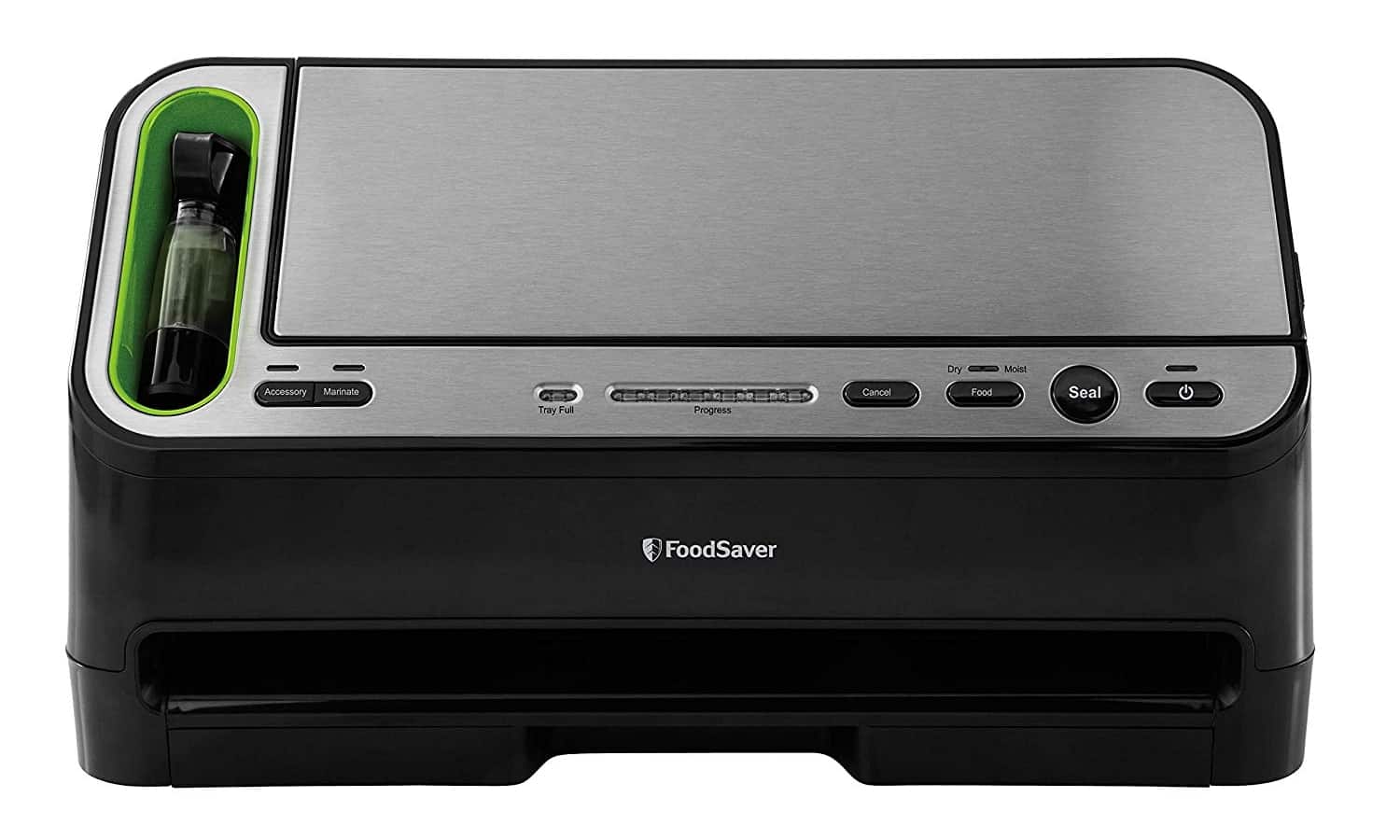
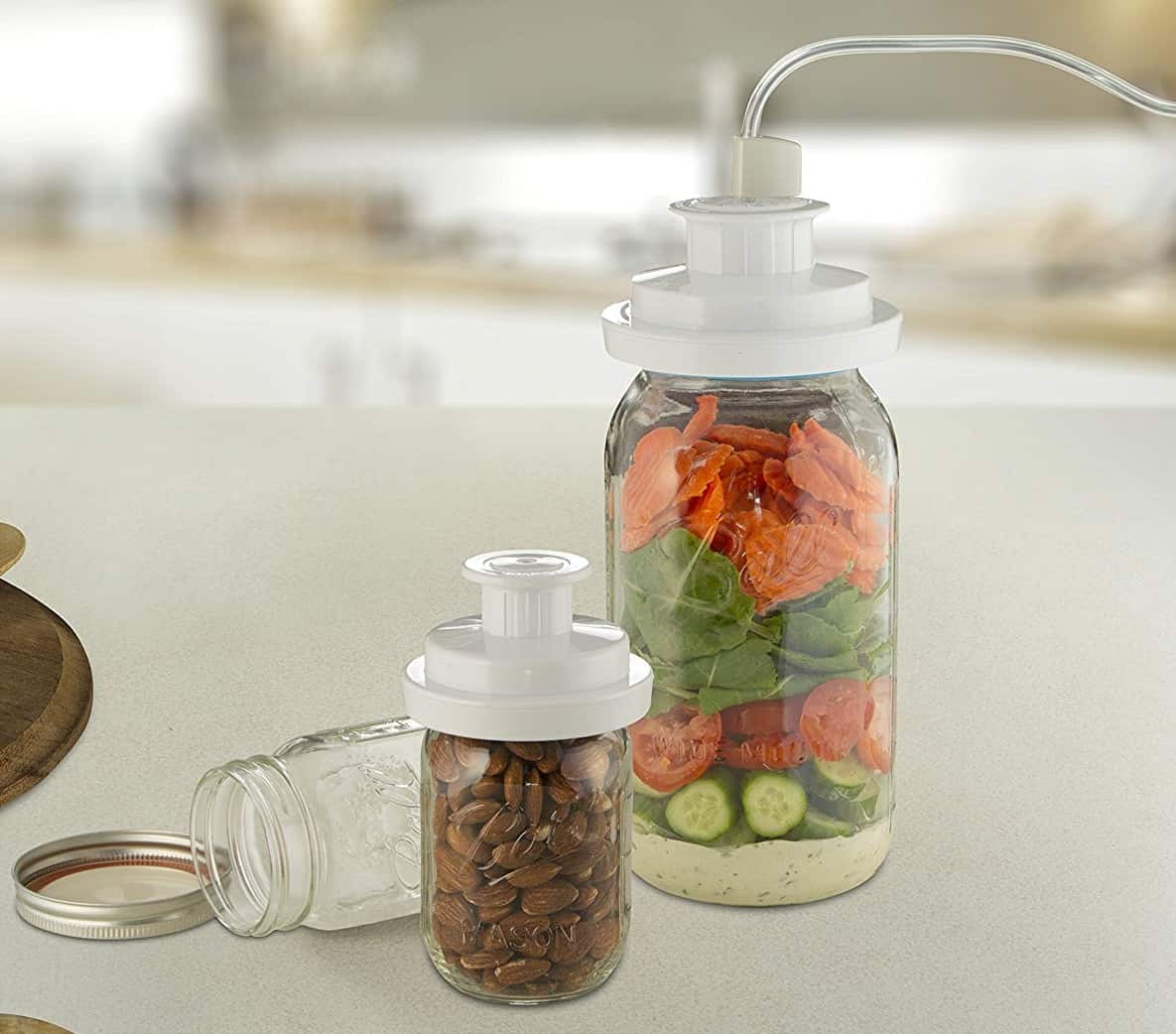
 FoodSaver Vacuum Sealer Wide-Mouth and Regular Jar Kit
  https://www.everydaycheapskate.com/wp-content/uploads/20260611-June-prep-to-save-time-and-money-this-summer-beach-ball-in-pool.png
800
1200
Mary Hunt
https://www.everydaycheapskate.com/wp-content/uploads/EC-Logo-by-Mary-Hunt-Tagline-Trimmed.png
Mary Hunt2026-06-11 22:51:312026-06-11 22:51:31What I Prep Once in June to Save Time and Money All Summer
https://www.everydaycheapskate.com/wp-content/uploads/20260611-June-prep-to-save-time-and-money-this-summer-beach-ball-in-pool.png
800
1200
Mary Hunt
https://www.everydaycheapskate.com/wp-content/uploads/EC-Logo-by-Mary-Hunt-Tagline-Trimmed.png
Mary Hunt2026-06-11 22:51:312026-06-11 22:51:31What I Prep Once in June to Save Time and Money All SummerSurprisingly Useful Ways to Use a Vacuum Sealer
shieldMary Hunt
calendar_todayFeb 27, 2020
updateUpdated Jun 15, 2026
schedule7 min read
verifiedFact-checked

My FoodSaver vacuum sealer is one of my favorite kitchen appliances. I vacuum seal fresh fruit to extend its useful life by at least two weeks, often much longer. I vacuum seal meat before I freeze it so it can last up to 3 years (yes, three!) and still taste fresh, flavorful, and freezer-burn free.
Prep ahead meals and leftovers stored in the fridge will stay fresh up to weeks later instead of spoiling in days when vacuum sealed. I store salad greens for weeks in vacuum-sealed mason jars.
I could go on and on about how my FoodSaver saves our food bill, but today I want to tell you the useful ways I use a FoodSaver that have nothing to do with food!
Convenience
I’ve learned through trial and error that for my vacuum sealer to work at maximum efficiency it must be handy. It cannot be stuck in a cupboard or on a pantry shelf. If I have to make the smallest effort to get it out and plug it in, I stop using it because I forget, or it’s such a hassle I skip using it “just this one time.”
My FoodSaver has to sit on the counter with nothing obstructing it—always plugged in and ready to go. And the bags have to be equally handy. I keep them in the drawer immediately below the counter where FoodSaver resides.
Reusing bags
When sealing items I know I will use repeatedly (take hamburger buns for example—I seal a dozen, but then open it to remove the number I need and reseal the bag) make sure to start with a larger-than-necessary pouch the first time. This way, you can open by cutting off the seal, and then reseal at least another time or two.
If you’re storing dry goods (not food), simply reuse a bag for another item if it becomes too small for your original intended use. They don’t have to be trashed after one use. You can also wash bags and dry thoroughly to use for other food storage.
Jewelry
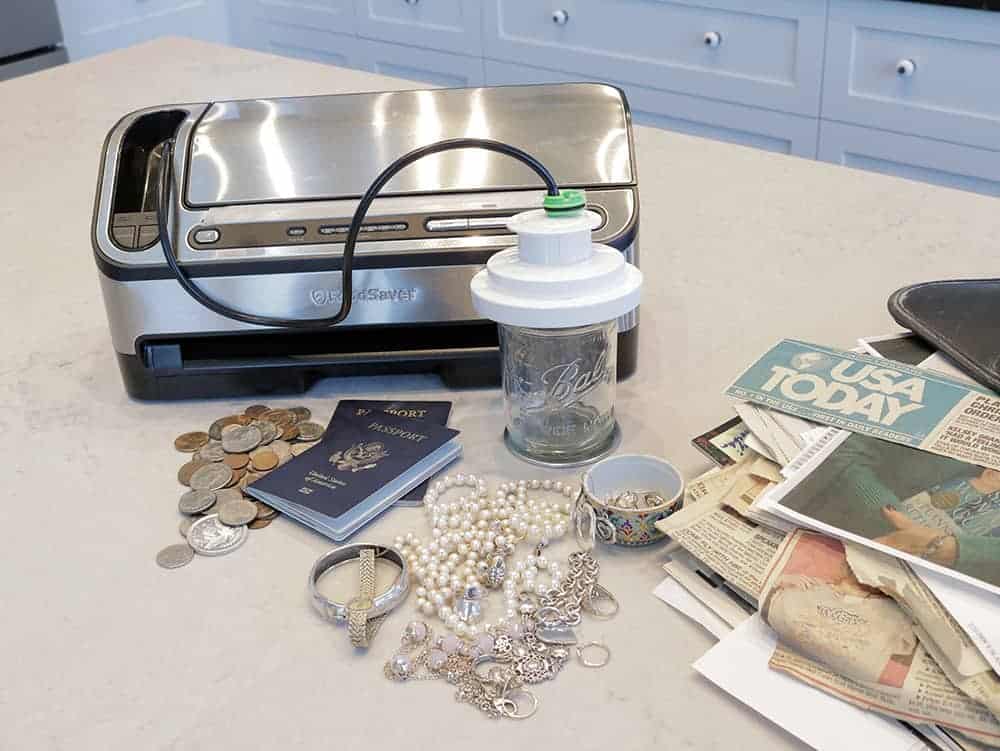
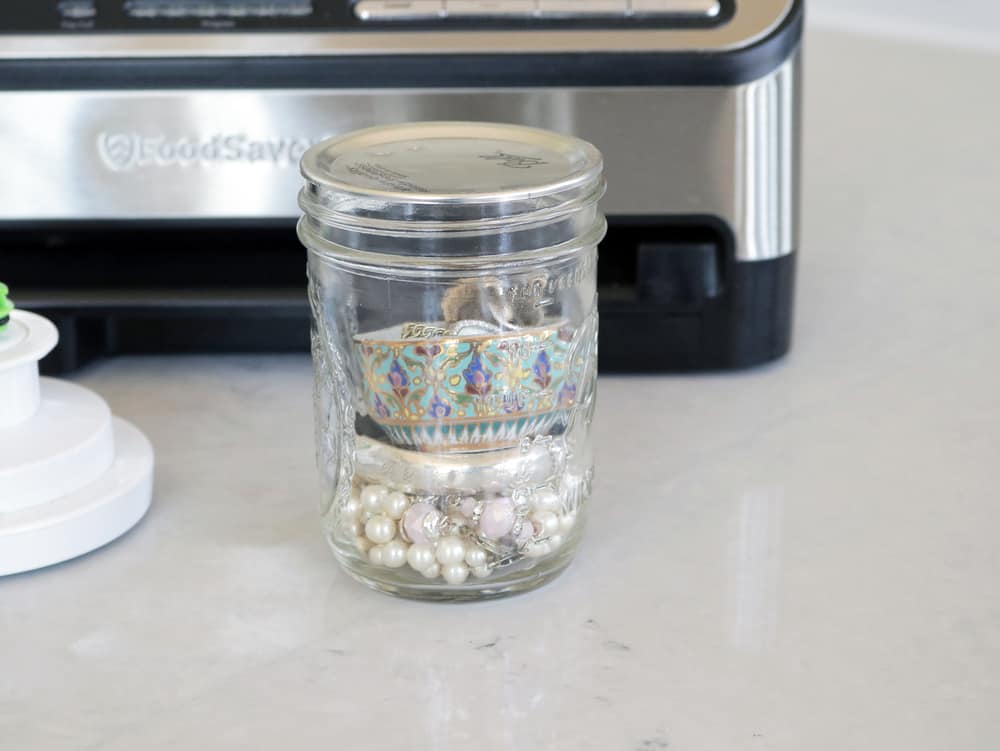
If you do not wear it regularly, vacuum seal your jewelry—costume as well as finer pieces. It keeps these precious possessions clean, sparkling, and at their peak of beauty. And when you’re ready to wear a piece, no polishing or cleaning required. It’s ready to go.
I use a mason jar and the FoodSaver jar sealer for my jewelry. It’s easy to pop off the lid, and then quickly re-seal.
Everyday Cheapskate participates in the Amazon Services LLC Associates Program, an affiliate advertising program designed to provide a means for us to earn from qualifying purchases, at no cost to you.
Silver
I vacuum-seal anything that tarnishes that I do not use on a daily basis, such as sterling silver flatware, silver trays, and bowls. By removing the air, the items do not tarnish because the enemy (oxygen) has been locked out. This protects my silver things from harsh polishes and protects my time. I hate to polish silver but not as much as I used to!
 FoodSaver Vacuum Sealing Machine and Starter Kit
This FoodSaver Vacuum Sealing System helps keep food fresh longer. The system removes air, one of the main causes of mold and food spoilage, from bags and creates an airtight seal to lock in freshness. Used consistently, it pays for itself in no time!
Coins
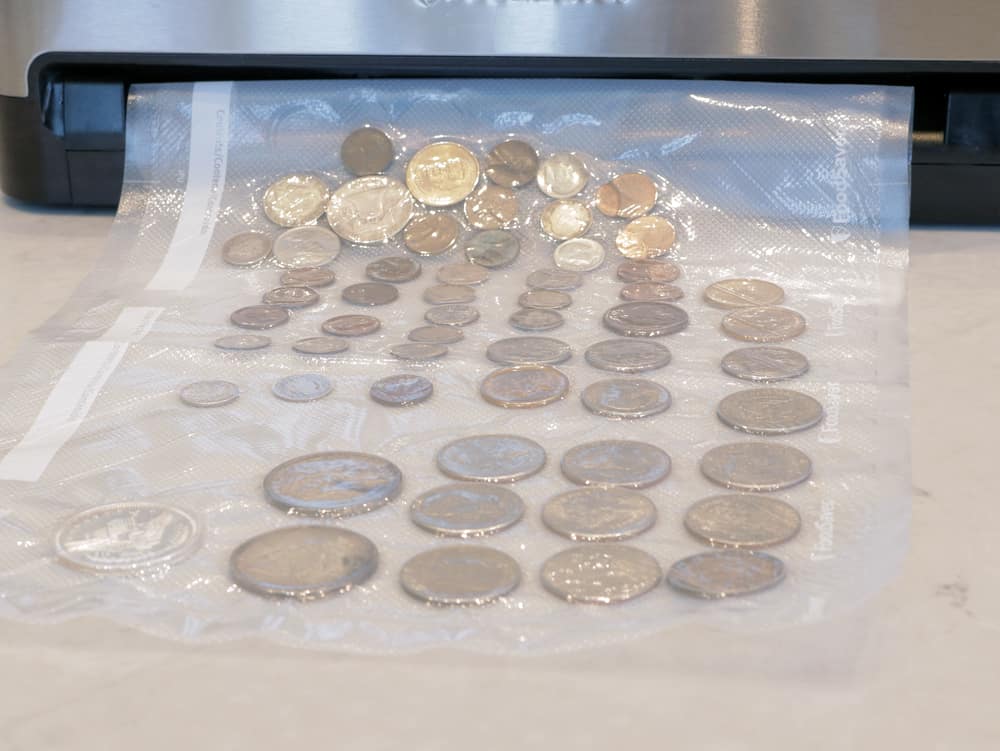
All of my commemorative and other collectible coins are safely vacuum sealed. This protects their integrity and collectible value. Because the bags are clear and I seal them in a single layer, their beauty remains visible.
Photographs
I have precious, antique photos sealed for protection. Note: I do not vacuum the air out with photos, however. Instead, I use only the seal function. The vacuuming process can cause the transfer of the photo to the plastic. Instead, I press out as much air as possible and then press “Seal.”
 FoodSaver Vacuum Sealer Wide-Mouth and Regular Jar Kit
Turns any mason-type jar into a rigid, airtight “canister” using a FoodSaver. To use, place the item to be vacuum packaged inside the mason jar, place the mason jar lid on top of the jar, push the Jar Sealer down firmly until it covers the entire rim of the jar, insert one end of the accessory port onto the FoodSaver appliance and the other end on top of the sealer, then vacuum seal.
Documents
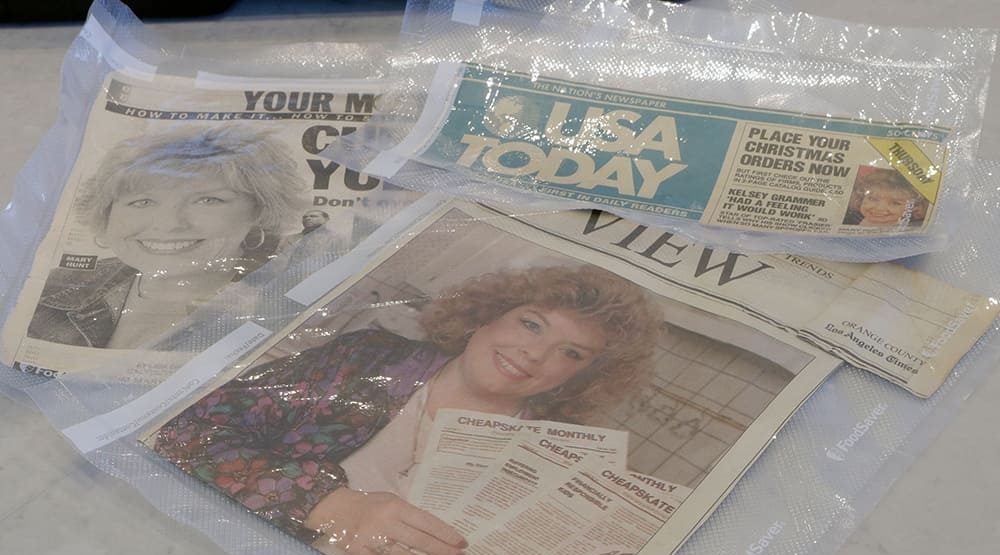
Open oxygen is the enemy of old paper, especially newsprint. By sealing family heirlooms, birth certificates, precious documents—even newspaper and magazine clippings—I’m protecting their longevity.
Waterproof
I use my FoodSaver to create waterproof pouches for money, maps, matches and more for camping or emergencies.
Passports
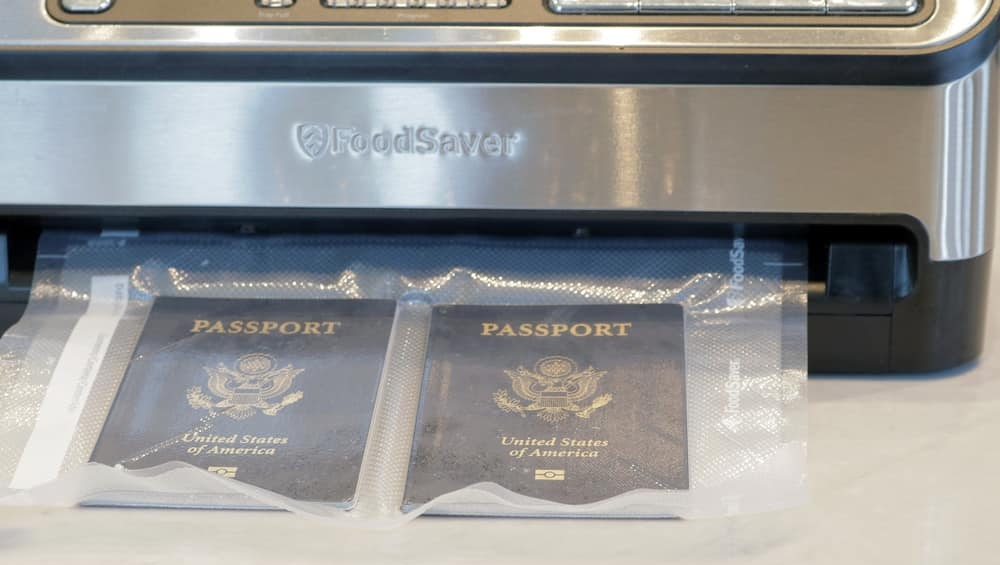
I vacuum seal our passports before putting them into the safe. This keeps them dry and mold-free (lots of moisture can show up inside a locked and sealed safe, which is why just about everything in our safe is vacuum-sealed).
Ammo
Ammunition needs to be kept dry. There is no better way to do that than with a FoodSaver. Vacuum sealing removes the oxygen and keeps moisture out. A simple way to do this is to take a FoodSaver bag and fill it with ammo and then vacuum seal it. Follow these instructions. Store it in your bug out bag or ammo cans.
First published: 7-10-19; Updated 2-27-20

More from Everyday Cheapskate
https://www.everydaycheapskate.com/wp-content/uploads/20260611-June-prep-to-save-time-and-money-this-summer-beach-ball-in-pool.png
800
1200
Mary Hunt
https://www.everydaycheapskate.com/wp-content/uploads/EC-Logo-by-Mary-Hunt-Tagline-Trimmed.png
Mary Hunt2026-06-11 22:51:312026-06-11 22:51:31What I Prep Once in June to Save Time and Money All Summer https://www.everydaycheapskate.com/wp-content/uploads/20260610-how-to-cool-down-your-house-at-night-bed-with-window-and-view.png
800
1200
Mary Hunt
https://www.everydaycheapskate.com/wp-content/uploads/EC-Logo-by-Mary-Hunt-Tagline-Trimmed.png
Mary Hunt2026-06-10 18:37:072026-06-10 18:37:07The 10-Minute Nighttime Reset That Cools Down Your House
https://www.everydaycheapskate.com/wp-content/uploads/20260610-how-to-cool-down-your-house-at-night-bed-with-window-and-view.png
800
1200
Mary Hunt
https://www.everydaycheapskate.com/wp-content/uploads/EC-Logo-by-Mary-Hunt-Tagline-Trimmed.png
Mary Hunt2026-06-10 18:37:072026-06-10 18:37:07The 10-Minute Nighttime Reset That Cools Down Your House https://www.everydaycheapskate.com/wp-content/uploads/20260607-woman-grocery-shopping-pushing-cart-with-apples-and-cauliflower.png
800
1200
Mary Hunt
https://www.everydaycheapskate.com/wp-content/uploads/EC-Logo-by-Mary-Hunt-Tagline-Trimmed.png
Mary Hunt2026-06-09 23:20:292026-06-09 23:20:29How to Read a Grocery Store Sale Cycle (And Stop Overpaying)
https://www.everydaycheapskate.com/wp-content/uploads/20260607-woman-grocery-shopping-pushing-cart-with-apples-and-cauliflower.png
800
1200
Mary Hunt
https://www.everydaycheapskate.com/wp-content/uploads/EC-Logo-by-Mary-Hunt-Tagline-Trimmed.png
Mary Hunt2026-06-09 23:20:292026-06-09 23:20:29How to Read a Grocery Store Sale Cycle (And Stop Overpaying) https://www.everydaycheapskate.com/wp-content/uploads/20260604-Fathers-Day-activities-on-a-budget-dad-and-daughter-pointing-up-to-clouds-in-the-blue-sky.png
800
1200
Mary Hunt
https://www.everydaycheapskate.com/wp-content/uploads/EC-Logo-by-Mary-Hunt-Tagline-Trimmed.png
Mary Hunt2026-06-04 21:53:382026-06-04 21:55:20What to Do on Father’s Day: 30 Ideas He’ll Love
https://www.everydaycheapskate.com/wp-content/uploads/20260604-Fathers-Day-activities-on-a-budget-dad-and-daughter-pointing-up-to-clouds-in-the-blue-sky.png
800
1200
Mary Hunt
https://www.everydaycheapskate.com/wp-content/uploads/EC-Logo-by-Mary-Hunt-Tagline-Trimmed.png
Mary Hunt2026-06-04 21:53:382026-06-04 21:55:20What to Do on Father’s Day: 30 Ideas He’ll Love https://www.everydaycheapskate.com/wp-content/uploads/20260603-keeping-laundry-white.png
800
1200
Mary Hunt
https://www.everydaycheapskate.com/wp-content/uploads/EC-Logo-by-Mary-Hunt-Tagline-Trimmed.png
Mary Hunt2026-06-03 19:14:082026-06-03 19:16:53How to Keep White Clothes Actually White (Yes, It’s Possible)
https://www.everydaycheapskate.com/wp-content/uploads/20260603-keeping-laundry-white.png
800
1200
Mary Hunt
https://www.everydaycheapskate.com/wp-content/uploads/EC-Logo-by-Mary-Hunt-Tagline-Trimmed.png
Mary Hunt2026-06-03 19:14:082026-06-03 19:16:53How to Keep White Clothes Actually White (Yes, It’s Possible) https://www.everydaycheapskate.com/wp-content/uploads/20260501-bowl-of-salad-how-to-keep-greens-and-lettuce-from-wilting-and-getting-slimey.png
800
1200
Mary Hunt
https://www.everydaycheapskate.com/wp-content/uploads/EC-Logo-by-Mary-Hunt-Tagline-Trimmed.png
Mary Hunt2026-06-01 10:22:382026-06-01 10:24:52The Best Way to Store Salad Greens and Keep Them Fresh
https://www.everydaycheapskate.com/wp-content/uploads/20260501-bowl-of-salad-how-to-keep-greens-and-lettuce-from-wilting-and-getting-slimey.png
800
1200
Mary Hunt
https://www.everydaycheapskate.com/wp-content/uploads/EC-Logo-by-Mary-Hunt-Tagline-Trimmed.png
Mary Hunt2026-06-01 10:22:382026-06-01 10:24:52The Best Way to Store Salad Greens and Keep Them Fresh https://www.everydaycheapskate.com/wp-content/uploads/20260530-bright-contemporary-kitchen-how-to-fix-a-smelly-kitchen-sink-drain.png
800
1200
Mary Hunt
https://www.everydaycheapskate.com/wp-content/uploads/EC-Logo-by-Mary-Hunt-Tagline-Trimmed.png
Mary Hunt2026-05-30 13:19:232026-05-30 13:19:23How to Get Rid of a Smelly Kitchen Sink Drain for Good
https://www.everydaycheapskate.com/wp-content/uploads/20260530-bright-contemporary-kitchen-how-to-fix-a-smelly-kitchen-sink-drain.png
800
1200
Mary Hunt
https://www.everydaycheapskate.com/wp-content/uploads/EC-Logo-by-Mary-Hunt-Tagline-Trimmed.png
Mary Hunt2026-05-30 13:19:232026-05-30 13:19:23How to Get Rid of a Smelly Kitchen Sink Drain for Good https://www.everydaycheapskate.com/wp-content/uploads/20260523-hurricane-season-prep-warning-sign-with-dark-cloudy-sky-in-background.png
800
1200
Mary Hunt
https://www.everydaycheapskate.com/wp-content/uploads/EC-Logo-by-Mary-Hunt-Tagline-Trimmed.png
Mary Hunt2026-05-23 14:36:062026-05-23 14:36:08Hurricane Prep on a Budget: What You Actually Need Before June 1
https://www.everydaycheapskate.com/wp-content/uploads/20260523-hurricane-season-prep-warning-sign-with-dark-cloudy-sky-in-background.png
800
1200
Mary Hunt
https://www.everydaycheapskate.com/wp-content/uploads/EC-Logo-by-Mary-Hunt-Tagline-Trimmed.png
Mary Hunt2026-05-23 14:36:062026-05-23 14:36:08Hurricane Prep on a Budget: What You Actually Need Before June 1 https://www.everydaycheapskate.com/wp-content/uploads/20260522-how-to-honor-and-remember-memorial-day-flags-in-grass.png
800
1200
Mary Hunt
https://www.everydaycheapskate.com/wp-content/uploads/EC-Logo-by-Mary-Hunt-Tagline-Trimmed.png
Mary Hunt2026-05-22 15:16:422026-05-22 15:18:55Memorial Day Activities: How to Honor the Fallen
https://www.everydaycheapskate.com/wp-content/uploads/20260522-how-to-honor-and-remember-memorial-day-flags-in-grass.png
800
1200
Mary Hunt
https://www.everydaycheapskate.com/wp-content/uploads/EC-Logo-by-Mary-Hunt-Tagline-Trimmed.png
Mary Hunt2026-05-22 15:16:422026-05-22 15:18:55Memorial Day Activities: How to Honor the FallenPlease keep your comments positive, encouraging, helpful, brief,
and on-topic in keeping with EC Commenting Guidelines
Originally published at everydaycheapskate.com.
M
Written & reviewed by
Mary Hunt
Our editorial team researches and verifies every money-saving guide before publishing. Editorial policy · About us

