
 https://www.everydaycheapskate.com/wp-content/uploads/20260611-June-prep-to-save-time-and-money-this-summer-beach-ball-in-pool.png
800
1200
Mary Hunt
https://www.everydaycheapskate.com/wp-content/uploads/EC-Logo-by-Mary-Hunt-Tagline-Trimmed.png
Mary Hunt2026-06-11 22:51:312026-06-11 22:51:31What I Prep Once in June to Save Time and Money All Summer
https://www.everydaycheapskate.com/wp-content/uploads/20260611-June-prep-to-save-time-and-money-this-summer-beach-ball-in-pool.png
800
1200
Mary Hunt
https://www.everydaycheapskate.com/wp-content/uploads/EC-Logo-by-Mary-Hunt-Tagline-Trimmed.png
Mary Hunt2026-06-11 22:51:312026-06-11 22:51:31What I Prep Once in June to Save Time and Money All SummerTry This Old Restaurant Cleaning Trick
shieldMary Hunt
calendar_todaySep 11, 2020
updateUpdated Jun 15, 2026
schedule7 min read
verifiedFact-checked

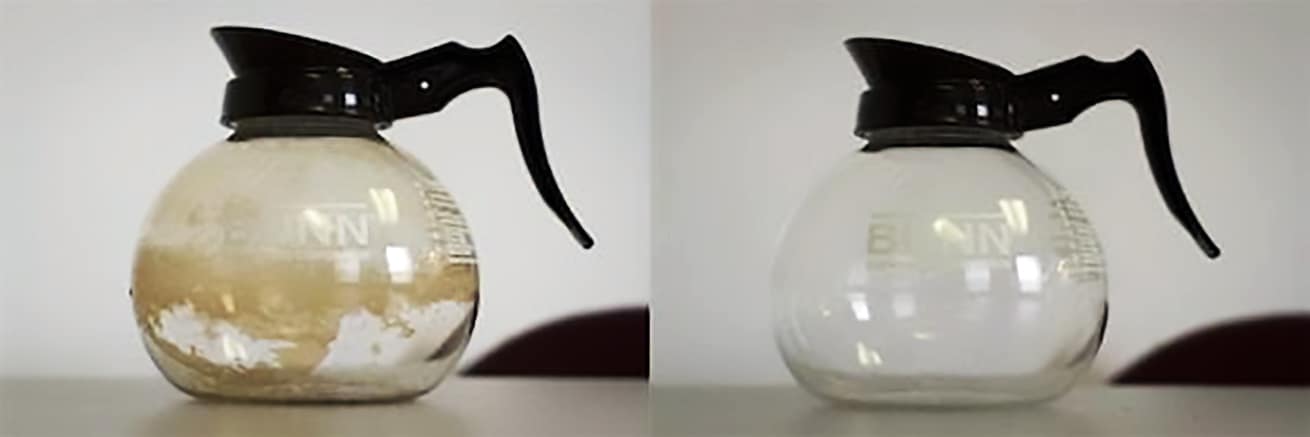
Have you ever left the coffee pot overnight to wake to a blackened, disgusting, burnt-on mess? Can’t get rid of the gunky build-up in your favorite carafe or thermos—stuff you can see, but not reach? Try an old trick perfected by wait staff in restaurants, cafes, and coffee shops everywhere to get it sparkling clean.

Dear Mary: I have a big stainless coffee thermos. The opening makes it impossible to get in and clean. I have tried baking soda and vinegar, but that hasn’t worked to dissolve and remove the build-up of coffee stains. I can look in and see stuff I’d rather not see. How can I clean inside my thermos? Karen
Dear Karen: I have the perfect solution: Crushed ice, and salt. Fill the thermos about 1/4 full of crushed ice cubes (give large cubes a whack or two with something heavy). Add 3 to 4 tablespoons of ordinary table salt depending on the size of the thermos. Apply the lid. Now, shake it up baby!
Swirl it round and round, first clockwise then counterclockwise; upside down, up and down. The salt will begin to melt the ice allowing the pieces to move freely. You’ll get a good workout, too.
The salt acts like little non-abrasive sanding blocks. You may have to do this for a few minutes if you have a nasty build-up, repeating as necessary. Rinse well with cool water.
This old restaurant trick works with glass coffee carafes and glass-line thermoses, too. Just make sure the carafe has cooled to roo temperature and crushed iced vubes. It‘s so much fun I almost look forward to a burned-on mess in the bottom of our office coffee pot so I can amuse and amaze myself.
Dear Mary: My husband contributes 8% to his employer’s 401(k) plan. Would it be wise to temporarily stop that contribution in that we have about $50,000 unsecured debt? Debbie
Dear Debbie: Yes, but only to the amount of a match, if any, the employer is making, and only until your unsecured debts are paid.
Let’s say that of the 8% he contributes, 3% is matched by his employer. That’s free money he would be foolish to leave on the table. So in that case, he should reduce his contribution to 3% only.
Putting your hard-earned money at risk is while you are carrying high-interest consumer debt is not wise. No matter how you cut it, money in a 401(k) is at risk. But investing in your debt carries no risk and offers a guaranteed rate of return. Here’s how that works:
Let’s say you have a $10,000 revolving credit card balance at 18% interest. Each month you are paying $150 in interest ($10,000 x 18% / 12 = $150). Great Aunt Gertie dies and leaves you $10,000. You can either pay off the debt or invest the money.
Let’s say you choose to invest the ten-grand in traditional stocks and bonds. Things don’t go well and you lose some or all of it in the stock market. You still owe that $10,000 on the credit card and you’re still paying $150 interest each month.
Now let’s say you go the other way and use the money to repay the $10,000 debt in full. Every month you get to keep the $150 you were sending to the credit card company. That is your guaranteed 18% return on the $10,000 “investment” you made in your debt. It’s a sure thing regardless of what happens with the economy. Now that’s a good deal!
Caution: Even though you stop making contributions for a season, do not cash in his 40l(k) account. The penalties and tax consequences are too severe. And the minute that debt is is paid in full, unpause the 401(k) contribution and go right back to where you left off.
Dear Mary: It takes about two weeks after I mail my mortgage payment for the check to clear my bank. My sister says my lender is making me pay more interest by delaying depositing my check. Is it true? Mary S.
Dear Mary S: No. Your sister may be confusing your mortgage, which is a “closed-end contract” with an open-end contract like a credit-card account. The law treats the two differently.
A closed-end contract has a fixed payment schedule. The interest portion of your monthly mortgage payment is the same whether you pay it early or at the last minute. A credit-card or revolving open-end contract works differently. Making your payment early allows more of it to go to the principal because interest is figured on the average daily balance.
Federal law stated in The Fair Credit Billing Act requires open-end lenders to credit all payments on the date they’re received, unless no extra charges would result if they failed to do so. But with your mortgage payment, it doesn’t matter on which day during the month it is processed, provided of course it gets there by the due date.
Hope that helps!

More from Everyday Cheapskate
https://www.everydaycheapskate.com/wp-content/uploads/20260611-June-prep-to-save-time-and-money-this-summer-beach-ball-in-pool.png
800
1200
Mary Hunt
https://www.everydaycheapskate.com/wp-content/uploads/EC-Logo-by-Mary-Hunt-Tagline-Trimmed.png
Mary Hunt2026-06-11 22:51:312026-06-11 22:51:31What I Prep Once in June to Save Time and Money All Summer https://www.everydaycheapskate.com/wp-content/uploads/20260610-how-to-cool-down-your-house-at-night-bed-with-window-and-view.png
800
1200
Mary Hunt
https://www.everydaycheapskate.com/wp-content/uploads/EC-Logo-by-Mary-Hunt-Tagline-Trimmed.png
Mary Hunt2026-06-10 18:37:072026-06-10 18:37:07The 10-Minute Nighttime Reset That Cools Down Your House
https://www.everydaycheapskate.com/wp-content/uploads/20260610-how-to-cool-down-your-house-at-night-bed-with-window-and-view.png
800
1200
Mary Hunt
https://www.everydaycheapskate.com/wp-content/uploads/EC-Logo-by-Mary-Hunt-Tagline-Trimmed.png
Mary Hunt2026-06-10 18:37:072026-06-10 18:37:07The 10-Minute Nighttime Reset That Cools Down Your House https://www.everydaycheapskate.com/wp-content/uploads/20260607-woman-grocery-shopping-pushing-cart-with-apples-and-cauliflower.png
800
1200
Mary Hunt
https://www.everydaycheapskate.com/wp-content/uploads/EC-Logo-by-Mary-Hunt-Tagline-Trimmed.png
Mary Hunt2026-06-09 23:20:292026-06-09 23:20:29How to Read a Grocery Store Sale Cycle (And Stop Overpaying)
https://www.everydaycheapskate.com/wp-content/uploads/20260607-woman-grocery-shopping-pushing-cart-with-apples-and-cauliflower.png
800
1200
Mary Hunt
https://www.everydaycheapskate.com/wp-content/uploads/EC-Logo-by-Mary-Hunt-Tagline-Trimmed.png
Mary Hunt2026-06-09 23:20:292026-06-09 23:20:29How to Read a Grocery Store Sale Cycle (And Stop Overpaying) https://www.everydaycheapskate.com/wp-content/uploads/20260607-hamburger-patties-on-hot-grill-how-to-clean-a-bbq-grill-without-using-a-metal-brush.png
800
1200
Mary Hunt
https://www.everydaycheapskate.com/wp-content/uploads/EC-Logo-by-Mary-Hunt-Tagline-Trimmed.png
Mary Hunt2026-06-07 16:44:022026-06-07 16:44:025 No-Brush Ways to Clean Your Grill (Using Stuff You Already Have)
https://www.everydaycheapskate.com/wp-content/uploads/20260607-hamburger-patties-on-hot-grill-how-to-clean-a-bbq-grill-without-using-a-metal-brush.png
800
1200
Mary Hunt
https://www.everydaycheapskate.com/wp-content/uploads/EC-Logo-by-Mary-Hunt-Tagline-Trimmed.png
Mary Hunt2026-06-07 16:44:022026-06-07 16:44:025 No-Brush Ways to Clean Your Grill (Using Stuff You Already Have) https://www.everydaycheapskate.com/wp-content/uploads/20260604-Fathers-Day-activities-on-a-budget-dad-and-daughter-pointing-up-to-clouds-in-the-blue-sky.png
800
1200
Mary Hunt
https://www.everydaycheapskate.com/wp-content/uploads/EC-Logo-by-Mary-Hunt-Tagline-Trimmed.png
Mary Hunt2026-06-04 21:53:382026-06-04 21:55:20What to Do on Father’s Day: 30 Ideas He’ll Love
https://www.everydaycheapskate.com/wp-content/uploads/20260604-Fathers-Day-activities-on-a-budget-dad-and-daughter-pointing-up-to-clouds-in-the-blue-sky.png
800
1200
Mary Hunt
https://www.everydaycheapskate.com/wp-content/uploads/EC-Logo-by-Mary-Hunt-Tagline-Trimmed.png
Mary Hunt2026-06-04 21:53:382026-06-04 21:55:20What to Do on Father’s Day: 30 Ideas He’ll Love https://www.everydaycheapskate.com/wp-content/uploads/20260603-keeping-laundry-white.png
800
1200
Mary Hunt
https://www.everydaycheapskate.com/wp-content/uploads/EC-Logo-by-Mary-Hunt-Tagline-Trimmed.png
Mary Hunt2026-06-03 19:14:082026-06-03 19:16:53How to Keep White Clothes Actually White (Yes, It’s Possible)
https://www.everydaycheapskate.com/wp-content/uploads/20260603-keeping-laundry-white.png
800
1200
Mary Hunt
https://www.everydaycheapskate.com/wp-content/uploads/EC-Logo-by-Mary-Hunt-Tagline-Trimmed.png
Mary Hunt2026-06-03 19:14:082026-06-03 19:16:53How to Keep White Clothes Actually White (Yes, It’s Possible) https://www.everydaycheapskate.com/wp-content/uploads/20260501-bowl-of-salad-how-to-keep-greens-and-lettuce-from-wilting-and-getting-slimey.png
800
1200
Mary Hunt
https://www.everydaycheapskate.com/wp-content/uploads/EC-Logo-by-Mary-Hunt-Tagline-Trimmed.png
Mary Hunt2026-06-01 10:22:382026-06-01 10:24:52The Best Way to Store Salad Greens and Keep Them Fresh
https://www.everydaycheapskate.com/wp-content/uploads/20260501-bowl-of-salad-how-to-keep-greens-and-lettuce-from-wilting-and-getting-slimey.png
800
1200
Mary Hunt
https://www.everydaycheapskate.com/wp-content/uploads/EC-Logo-by-Mary-Hunt-Tagline-Trimmed.png
Mary Hunt2026-06-01 10:22:382026-06-01 10:24:52The Best Way to Store Salad Greens and Keep Them Fresh https://www.everydaycheapskate.com/wp-content/uploads/20260531-woman-cleaning-eyeglasses-with-a-microfiber-cloth-diy-lens-and-screen-cleaner-spray.png
800
1200
Mary Hunt
https://www.everydaycheapskate.com/wp-content/uploads/EC-Logo-by-Mary-Hunt-Tagline-Trimmed.png
Mary Hunt2026-05-31 14:51:082026-05-31 14:51:08Homemade Eyeglass Lens Cleaner: 3 Simple Ingredients
https://www.everydaycheapskate.com/wp-content/uploads/20260531-woman-cleaning-eyeglasses-with-a-microfiber-cloth-diy-lens-and-screen-cleaner-spray.png
800
1200
Mary Hunt
https://www.everydaycheapskate.com/wp-content/uploads/EC-Logo-by-Mary-Hunt-Tagline-Trimmed.png
Mary Hunt2026-05-31 14:51:082026-05-31 14:51:08Homemade Eyeglass Lens Cleaner: 3 Simple Ingredients https://www.everydaycheapskate.com/wp-content/uploads/20260530-bright-contemporary-kitchen-how-to-fix-a-smelly-kitchen-sink-drain.png
800
1200
Mary Hunt
https://www.everydaycheapskate.com/wp-content/uploads/EC-Logo-by-Mary-Hunt-Tagline-Trimmed.png
Mary Hunt2026-05-30 13:19:232026-05-30 13:19:23How to Get Rid of a Smelly Kitchen Sink Drain for Good
https://www.everydaycheapskate.com/wp-content/uploads/20260530-bright-contemporary-kitchen-how-to-fix-a-smelly-kitchen-sink-drain.png
800
1200
Mary Hunt
https://www.everydaycheapskate.com/wp-content/uploads/EC-Logo-by-Mary-Hunt-Tagline-Trimmed.png
Mary Hunt2026-05-30 13:19:232026-05-30 13:19:23How to Get Rid of a Smelly Kitchen Sink Drain for GoodPlease keep your comments positive, encouraging, helpful, brief,
and on-topic in keeping with EC Commenting Guidelines
Originally published at everydaycheapskate.com.
M
Written & reviewed by
Mary Hunt
Our editorial team researches and verifies every money-saving guide before publishing. Editorial policy · About us

