Trying to make the most of grow all our food? You are in the right place. Below we break it down in plain English, with practical tips you can actually use.
Key Takeaways
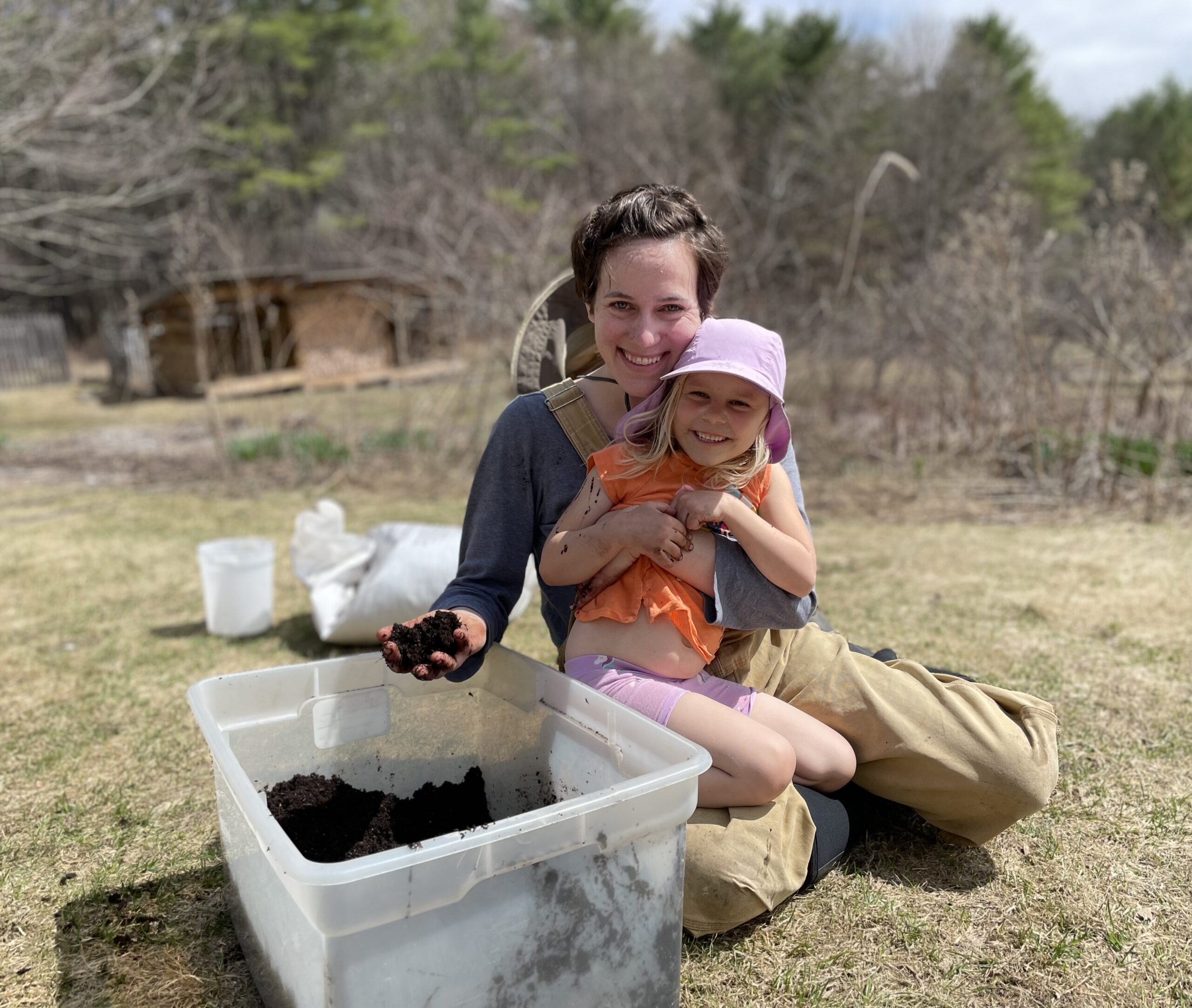
- Littlewoods and me starting our garden seeds this spring!
- One of the driving forces behind the birth of Frugalwoods was our desire to leave the city and buy a homestead in the woods.
- That happened in May 2016 and let me tell you, we had A LOT of preconceived notions about what it would be like to live rurally, some of whi...
One of the driving forces behind the birth of Frugalwoods was our desire to leave the city and purchase a homestead in the woods. That happened in May 2016 and let me tell you, we had A LOT of preconceived notions about what it would be like to live rurally, some of which turned out to be true and some of which… not so much. It’s simple to gloss over the specifics when you’re dreaming about moving to the country. It becomes very much about the specifics when you lose power and water for a week in the dead of winter thanks to an ice storm. It’s those specifics-those powerful details-that have shaped our lives out here.
A gargantuan assumption was that we’d grow all of our own food.
Before so much as starting a single tomato plant, I nurtured an idyllic vision of us growing all the fruits and vegetables we could ever want each summer. There I was among the rows, singing to each vegetable, encouraging it to flourish. Then I saw us in the kitchen-with our children gracefully assisting-as we meticulously preserved each harvest for winter. We then pan to us eating from our larder as the snow falls and the woodstove warms us with wood from our land. Little House On the Prairie without the problematic gender roles, hunger, abysmal treatment of indigenous peoples, and lack of antibiotics and modern medicine!
Our homestead in the woodsI have a powerful imagination and in addition to growing fruits and vegetables, I thought perhaps we’d raise meat chickens, pigs, goats-why not!-and have a dairy cow for milk from which I’d church my own butter and make my own cheese. Surely we could provide for all of our needs and live out a modern-day sustainable, free range, organic paradise of our own making. To be clear, all of this IS technically possible. And yes, plenty of folks do it.
However, I am not destined to be one of those folks.
My husband Nate and I moved to our 66-acre homestead in the woods of rural Vermont on May 18, 2016 and today, seven years on, I want to share what we’ve learned, re-learned and are still learning about growing our own food. I’ll share more of our rural assumptions in upcoming posts, which are all part of a series on…
Old Me vs. Current Me: A Showdown
The first iteration of the “big” vegetable garden (before it got its fence)April was the NINTH anniversary of Frugalwoods and to celebrate, I’m typing down memory lane with reflections on some of my most influential old posts. Nine years is a long time to do anything and I’m curious to see if I agree with my old self or if my thoughts have changed in the intervening years. Since May is the SEVENTH anniversary of our transition to rural life, this seems the perfect time to reflect on rural.
You can check out my first three Frugalwoods nine-year retrospectives here:
- Reflecting on Nine Years of Frugalwoods
- Revisiting My 2015 Beauty Manifesto: What I Got Right, What I Got Wrong
- An Update On How Postpartum Depression Changed My Life
Now let’s get to debunking!
Rural Assumption #1: We’ll Grow and Raise All of Our Own Food!
Fact Check: That’s a nope.
This drone photo (by Nate) shows you the layout of our gardens pretty wellThe primary reason? This is an all-consuming, full-time job during harvest seasons and I do not want to grow, harvest and preserve food full-time.
I like to do a little bit of a lot of different things, and that includes some gardening and some canning and preserving.
To accept this, I had to let go of the image of myself as a perfect homesteader out here homesteading away. It’s just not who I am. I like what we do on our land, but I don’t want to do it all day, every day. After seven years, I finally no longer feel guilty for not growing and raising all of our food. I actually feel good about buying food from our farmer neighbors who commit to this work full-time. I like supporting their efforts. Plus, they’re a lot better at it than me.
Kidwoods harvesting tomatoes into her pockets…For Nate and me, the whole point of this lifestyle change was to let go of the city rat race, the external pressures and the societal expectations.
We wanted to no longer work for other people and no longer constantly rush around. Rural life, for us, means joy, time, freedom and space. And here’s the thing:
I’ve learned that chaining myself to my vegetable garden is really no different than chaining myself to my desk and computer.
A garden has endless needs, does not care about your time/energy/plans and exerts a lot of time-bound pressures. Anything that saps all my time and energy-and demands I do things I don’t have the desire to do-isn’t why I moved here. Excessive gardening stressed me out. So now, we grow a little bit of this and a tidbit of that and we call it a day. Let me tell you the story of how I got here.
The Kale & Chard Apocalypse of 2018
Detailed in this old post, this was the harvest that did me in. Still early in our gardening experiments, Nate started from seed, planted, weeded, watered and harvested 80 kale and chard plants. Yes, EIGHTY.
Me + the baby pool of kale and chardThat was 70 plants too numerous. Because let me tell you: that kale and chard LOVED growing here. It was the most successful thing we’ve ever planted. All 80 of them.
Still under the delusion that I was perhaps actually Laura Ingalls Wilder reincarnated, I was determined to preserve and save EVERY LAST STALK of kale and chard we grew. I wanted to see if we could do it-actually provide for all of our sustenance needs (insofar as kale and chard are concerned).
I spent hours harvesting, washing and drying these greens. The leaves were so enormous that I had to use our baby pool and several giant plastic tubs for rinsing stations. My poor parents made the mistake of coming for a visit during this debacle and got roped into helping (sorry again about that, mom and dad!). When stuff comes ripe, there are never enough hands to help. But you never know quite when that ripe day will be, which means you live at the whims of the garden.
After we’d harvested, washed and (kinda) dried the leaves, we took them into the kitchen for processing, which entailed:
- Chopping them up
- Blanching them to freeze
- OR canning them in a hot water bath canner
- OR turning them into kimchi
And we did it. It took DAYS. A plural number of days. While there were fun moments, it was stressful to do with two tiny kids underfoot. I was exhausted from bending over to harvest in the garden and stooping to wash and standing in the kitchen for hours to process. And that was just to process ONE crop. More precisely: ONE harvest of ONE crop.
Tomato sauce made from our garden two summers agoThe absolute worst part of it is that we didn’t have a chance to eat all of that hard-won preservation before some of it went bad.
Broke my heart to dump it out into the compost, but alas, home-canned stuff doesn’t last forever and I didn’t know how to calculate our consumption rate.
After that draining experience and the demoralizing realization that we couldn’t even consume all that we’d worked so hard to put away, I decided to change our homesteading food outlook. We are profoundly privileged that we’re not subsistence farmers. We do not have to do this to ourselves. I was competing against an idyllic image I had of people who homestead and grow their own food. I’d read the blogs and books and Instagram posts and I felt pressure to live up to that standard.
I’d succeeded in transplanting the stress and anxiety of my office job onto my gardening.
I needed to change this outlook or I’d soon start to hate what I’d worked so hard to enable myself to do.
Where We’ve Landed In 2023
Littlewoods was barely bigger than a chard leaf!It’s taken years and I’m still working to divorce myself from the self-imposed pressure to be a perfect homesteader. But I’m now a lot more realistic about how I want to spend my time during the summer months. I don’t want to be tethered to the garden. I want to take the kids to the local lake with friends, I want to go hear live music at our neighbors’ farm, I want to hike and play. I don’t want to spend 12 hours chopping and blanching enormous stalks of chard. I want balance and freedom in my life.
Numerous of you have asked me to re-start my This Month On The Homestead series and to be honest, I haven’t because I feel like we’re letting you down as homesteaders! We did SO MUCH work our first few years and now, we kinda just rinse and repeat with each season. The infrastructure set-up of our first years was staggering and I’m glad it’s over with. I certainly could re-start the series and let you know how things are going, but don’t hold your collective breaths.
Gardening Areas as of May 2023
We still garden and we still have a bunch of different food-growing areas around the property, so I’ll detail each. I did an exhaustive overview a few years ago in This Month On The Homestead: The Full Garden Rundown Including Building Raised Beds. If you’re a garden nerd and want to nerd out, that post’s for you!
Here’s where we plant food these days:
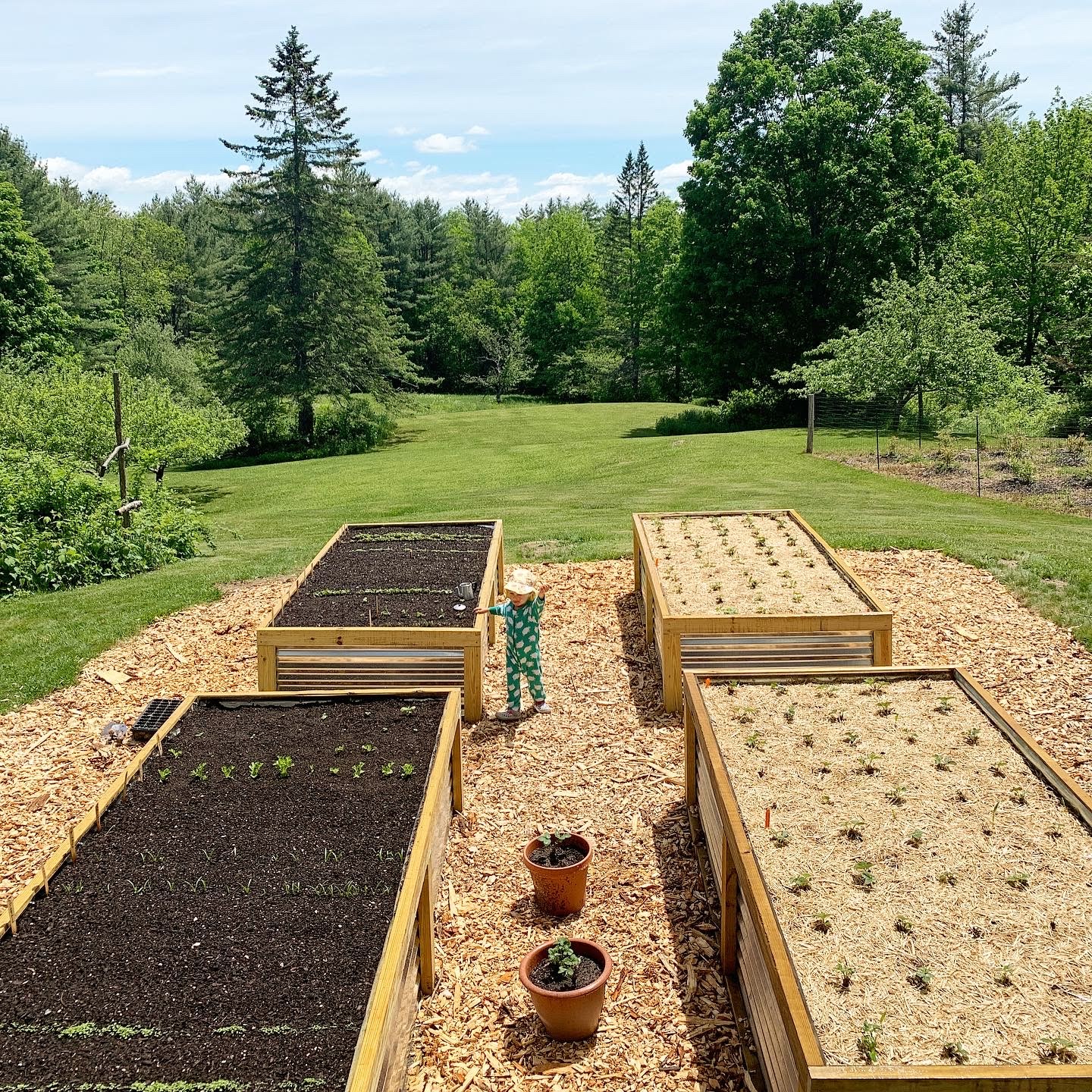
1) Four raised beds right next to our back porch.
The finished raised beds back in 2020, with Littlewoods holding court (strawberries on right; greens and herbs on left; mint in pots).Nate built these back in 2020 and I love them because of
Final Thoughts
The bottom line: a little research on grow all our food goes a long way. Compare your options, watch for seasonal offers, and never pay full price when a better deal is one click away.
Originally published at frugalwoods.com.