
 https://www.everydaycheapskate.com/wp-content/uploads/20260607-woman-grocery-shopping-pushing-cart-with-apples-and-cauliflower.png
800
1200
Mary Hunt
https://www.everydaycheapskate.com/wp-content/uploads/EC-Logo-by-Mary-Hunt-Tagline-Trimmed.png
Mary Hunt2026-06-09 23:20:292026-06-09 23:20:29How to Read a Grocery Store Sale Cycle (And Stop Overpaying)
https://www.everydaycheapskate.com/wp-content/uploads/20260607-woman-grocery-shopping-pushing-cart-with-apples-and-cauliflower.png
800
1200
Mary Hunt
https://www.everydaycheapskate.com/wp-content/uploads/EC-Logo-by-Mary-Hunt-Tagline-Trimmed.png
Mary Hunt2026-06-09 23:20:292026-06-09 23:20:29How to Read a Grocery Store Sale Cycle (And Stop Overpaying)With Sincere Apologies to Pawnshops Everywhere
shieldMary Hunt
calendar_todayMar 29, 2022
updateUpdated Jun 15, 2026
schedule8 min read
verifiedFact-checked

In the aftermath of America’s big economic wake-up call back in 2008, dollar stores and thrift stores saw—and continue to see—a big resurgence. And now a kind of retail quasi-lender is commanding all kinds of attention from sellers and buyers, too—pawnshops.
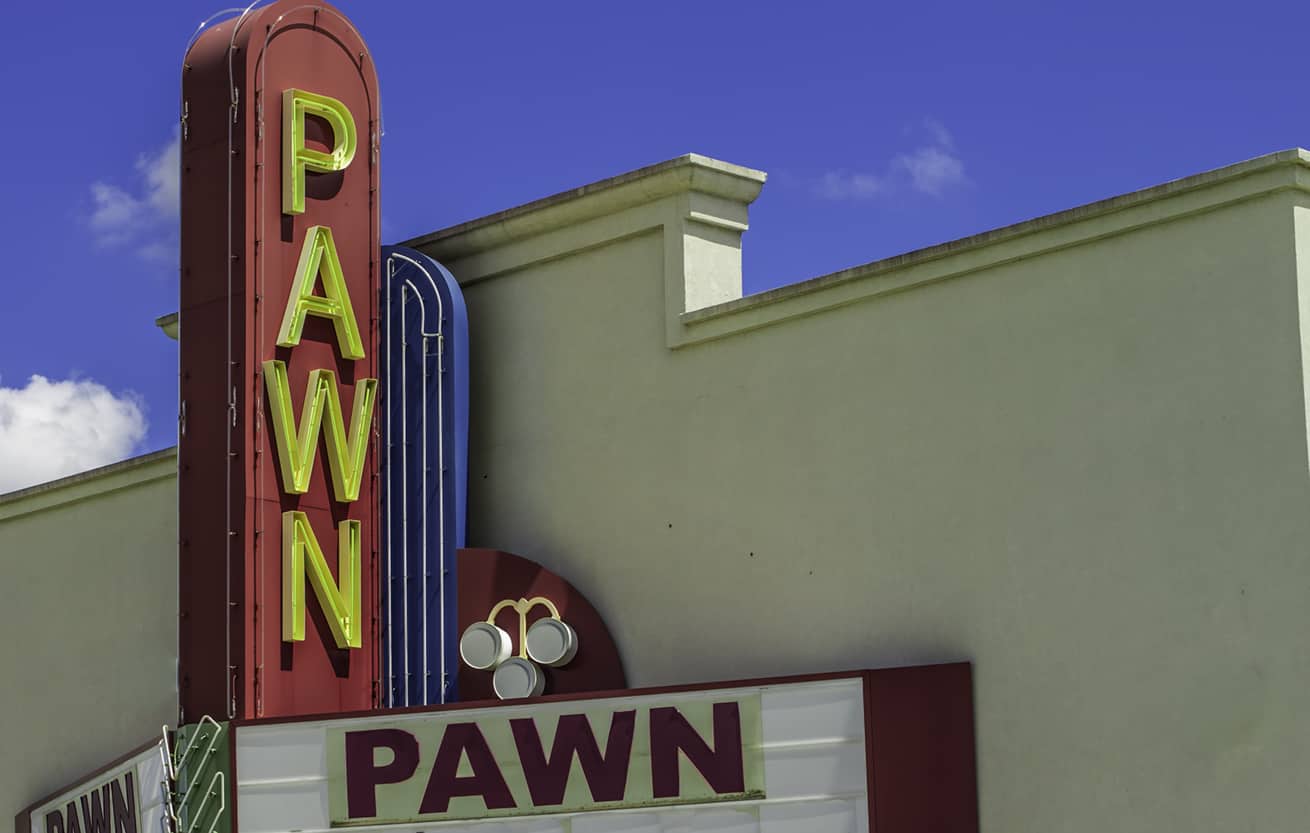
I admit to having grown up with a weird bias against pawnshops. To me, pawnshops were just one level above Vinny the Loan Shark operating illegally in some dark alley in the bad part of town just waiting to break some knees.
Where did that come from? I have no idea, but let me quickly follow by saying it is a faulty stereotype.
Pawnshops are respectable businesses that offer a viable service in many communities. And these days, thanks partly to Rick Harrison, whose family owns the Gold and Silver Pawnshop in Las Vegas and stars in the History Channel’s Pawn Stars—one of my favorites— business is booming.
What is a pawnshop?
A pawnshop, owned and operated by a licensed pawnbroker, makes secured loans on personal property left in the broker’s possession to be held as collateral.
The customer can redeem the property when the loan plus a finance charge (think: interest plus per-month service charge) is repaid.
RELATED: Your Own Personal Loan Shark
What to pawn?
Pawnbrokers accept a variety of personal property as collateral—jewelry, clocks, computers, firearms, art, electronics, and collectibles.
What are the terms?
When a pledged item is not redeemed according to the agreed-upon terms, pawnbrokers are required to notify the customer that the loan period has expired giving him or her a final opportunity to redeem the property.
Once expired, the broker has the right to sell the time. In some states, the pawnbroker gets to keep the entire proceeds from the sale. In others, once the loan (plus interest and fees) is recovered, the balance of the sale price, or some portion thereof, is paid to the “pawner.”
What are the costs?
Total fees charged by pawnshops, which in nearly all states are regulated by state and local laws, can range from 5 to 25 percent, per month. That’s high, I know. But remember we’re talking about very short-term loans. Say you have an urgent need, are cash-poor, and happen to own a classic Rolex watch. The pawnbroker offers to lend you $1,000 while holding the watch as collateral to secure that loan.
A month goes by, you ink a contract you’ve been waiting for months to land. You return to the shop after two months, hand the pawnbroker $1,020 (the $1,000 you borrowed plus two months of interest) and you have your watch, the contract and you’ve negotiated a happy outcome.
Remember here that we’re talking about merchandise that is often used and in some cases suspect because it’s impossible for the broker to predict the collateral’s true value, should he or she have to sell that item to recoup the money lent because the pawner has decided to turn this into a sale rather than continue with a loan.
What if it’s stolen?
In many states pawnbrokers are required by law to file daily a list of items that have been pledged, giving serial numbers and other identifying information. This gives police the opportunity to recover stolen items. If this happens then both the pawner and pawnbroker lose.
What items are best to pawn?
A pawn shop may not be the best place to liquidate items that you wish to sell outright like furniture, clothing, and similar household items. Sites like eBay and Craigslist or the local classifieds would likely fetch a higher price.
But for the person who needs some quick cash, and is willing to put up something of value to secure that loan—a pawnshop could help meet an urgent need.
Popular items in a pawnshop are jewelry and coins. Other good choices are firearms, high-quality tools, historical artifacts, and musical instruments.
After watching only a few episodes of Pawn Stars, you’ll get the feel for what types of merchandise make a pawnshop tick.
Why shop in a pawnshop?
And now, let me point out the upside of the pawnshop. Bargains. Go to a pawn shop if you’ve never been in one, just to look around. It’s quite amazing and really fun!
Expect to find a large variety of jewelry, power tools, all kinds of electronics, cameras, computer games, and computers.
You do need to know your stuff. Don’t expect pawnbrokers to be experts in all of the items they offer. Even my favorite hosts on Pawn Stars often plead ignorance and need to bring in an expert for a consultation.
Sharpen your negotiation skills
Whether you’re interested in pursuing any angle of the pawnshop scene or not, it behooves every one of us to become crackerjack negotiators. But how? It’s a skill for sure, and not only for making purchases but also when selling items, when training our teens and young adults how to not get ripped off or scuttled into a really bad deal.
To be a great negotiator is to know how to get a peek into the playbook of those we negotiate with every day. We already know where they’re going, why they’re making a certain move. It’s all about strategy and outsmarting our opponents.
If you tend to freak out at the mere thought of negotiating, I have a book for you written by Victoria Slater, who began her negotiating career at the tender age of nine at the Madrid flea market. She has a great story that takes her to join her husband’s company where she continues to negotiate high-stakes profitable deals in the Hollywood film industry.
Victoria’s 77-page booklet is a fun read, but more than that, it is super educational. I thought that with my 18 years as an industrial real estate broker, I knew it all. Wrong! Victoria’s 12 easy negotiating tips have turned into what I consider a bit of very useful ongoing education.
Don’t freak out when it comes to negotiating. Use this book to help. Why pay more when you could pay less? Why take less when you could get more?
One last thing
Need some quick cash and have something of value with a high degree of desirability to put up as collateral? Head for a pawnshop. And never forget that a pawnbroker is in business to turn a profit, however nothing is set in stone. Whether you’re a pawner or a buyer, everything is negotiable.
EverydayCheapskate is reader-supported. We participate in the Amazon Services LLC Associates Program, an affiliate advertising program designed to provide a means for publishers to earn fees by linking to Amazon.com and affiliated sites. Thanks!

More from Everyday Cheapskate
https://www.everydaycheapskate.com/wp-content/uploads/20260607-woman-grocery-shopping-pushing-cart-with-apples-and-cauliflower.png
800
1200
Mary Hunt
https://www.everydaycheapskate.com/wp-content/uploads/EC-Logo-by-Mary-Hunt-Tagline-Trimmed.png
Mary Hunt2026-06-09 23:20:292026-06-09 23:20:29How to Read a Grocery Store Sale Cycle (And Stop Overpaying) https://www.everydaycheapskate.com/wp-content/uploads/20260605-bill-glasses-and-pen-how-to-negotiate-your-cable-and-internet-bill.png
800
1200
Mary Hunt
https://www.everydaycheapskate.com/wp-content/uploads/EC-Logo-by-Mary-Hunt-Tagline-Trimmed.png
Mary Hunt2026-06-05 10:07:222026-06-05 10:07:22The Word-For-Word Script That Cuts Your Bills by $600 a Year
https://www.everydaycheapskate.com/wp-content/uploads/20260605-bill-glasses-and-pen-how-to-negotiate-your-cable-and-internet-bill.png
800
1200
Mary Hunt
https://www.everydaycheapskate.com/wp-content/uploads/EC-Logo-by-Mary-Hunt-Tagline-Trimmed.png
Mary Hunt2026-06-05 10:07:222026-06-05 10:07:22The Word-For-Word Script That Cuts Your Bills by $600 a Year https://www.everydaycheapskate.com/wp-content/uploads/20260514-buy-now-pay-later-app-on-iphone-in-womans-hands.png
800
1200
Mary Hunt
https://www.everydaycheapskate.com/wp-content/uploads/EC-Logo-by-Mary-Hunt-Tagline-Trimmed.png
Mary Hunt2026-05-14 10:20:212026-05-14 10:20:23Is Buy Now Pay Later Risky? What the Data Reveals
https://www.everydaycheapskate.com/wp-content/uploads/20260514-buy-now-pay-later-app-on-iphone-in-womans-hands.png
800
1200
Mary Hunt
https://www.everydaycheapskate.com/wp-content/uploads/EC-Logo-by-Mary-Hunt-Tagline-Trimmed.png
Mary Hunt2026-05-14 10:20:212026-05-14 10:20:23Is Buy Now Pay Later Risky? What the Data Reveals https://www.everydaycheapskate.com/wp-content/uploads/20260513-woman-walking-with-basket-down-store-aisle-grocery-items-with-the-biggest-price-increases.png
800
1200
Mary Hunt
https://www.everydaycheapskate.com/wp-content/uploads/EC-Logo-by-Mary-Hunt-Tagline-Trimmed.png
Mary Hunt2026-05-13 16:45:412026-05-13 16:45:425 Grocery Items Seeing the Biggest Price Increases Now
https://www.everydaycheapskate.com/wp-content/uploads/20260513-woman-walking-with-basket-down-store-aisle-grocery-items-with-the-biggest-price-increases.png
800
1200
Mary Hunt
https://www.everydaycheapskate.com/wp-content/uploads/EC-Logo-by-Mary-Hunt-Tagline-Trimmed.png
Mary Hunt2026-05-13 16:45:412026-05-13 16:45:425 Grocery Items Seeing the Biggest Price Increases Now https://www.everydaycheapskate.com/wp-content/uploads/20260509-when-to-open-and-close-windows-to-keep-house-cool.png
800
1200
Mary Hunt
https://www.everydaycheapskate.com/wp-content/uploads/EC-Logo-by-Mary-Hunt-Tagline-Trimmed.png
Mary Hunt2026-05-09 11:35:412026-05-09 11:35:43The “Open It or Close It” Rule That Lowers Your Power Bill
https://www.everydaycheapskate.com/wp-content/uploads/20260509-when-to-open-and-close-windows-to-keep-house-cool.png
800
1200
Mary Hunt
https://www.everydaycheapskate.com/wp-content/uploads/EC-Logo-by-Mary-Hunt-Tagline-Trimmed.png
Mary Hunt2026-05-09 11:35:412026-05-09 11:35:43The “Open It or Close It” Rule That Lowers Your Power Bill https://www.everydaycheapskate.com/wp-content/uploads/20260508-frugal-habits-that-save-money-family-looking-at-sunset.png
800
1200
Mary Hunt
https://www.everydaycheapskate.com/wp-content/uploads/EC-Logo-by-Mary-Hunt-Tagline-Trimmed.png
Mary Hunt2026-05-08 14:35:372026-05-08 14:35:4413 Frugal Habits That Don’t Feel Frugal at All
https://www.everydaycheapskate.com/wp-content/uploads/20260508-frugal-habits-that-save-money-family-looking-at-sunset.png
800
1200
Mary Hunt
https://www.everydaycheapskate.com/wp-content/uploads/EC-Logo-by-Mary-Hunt-Tagline-Trimmed.png
Mary Hunt2026-05-08 14:35:372026-05-08 14:35:4413 Frugal Habits That Don’t Feel Frugal at All https://www.everydaycheapskate.com/wp-content/uploads/20260505-budget-friendly-home-improvements-to-increase-sales-price.png
800
1200
Mary Hunt
https://www.everydaycheapskate.com/wp-content/uploads/EC-Logo-by-Mary-Hunt-Tagline-Trimmed.png
Mary Hunt2026-05-05 21:38:292026-05-05 21:40:21Before You List: 12 Easy Wins to Boost Your Sale Price
https://www.everydaycheapskate.com/wp-content/uploads/20260505-budget-friendly-home-improvements-to-increase-sales-price.png
800
1200
Mary Hunt
https://www.everydaycheapskate.com/wp-content/uploads/EC-Logo-by-Mary-Hunt-Tagline-Trimmed.png
Mary Hunt2026-05-05 21:38:292026-05-05 21:40:21Before You List: 12 Easy Wins to Boost Your Sale Price https://www.everydaycheapskate.com/wp-content/uploads/financially-responsible-kids-are-watching.jpg
833
1310
Mary Hunt
https://www.everydaycheapskate.com/wp-content/uploads/EC-Logo-by-Mary-Hunt-Tagline-Trimmed.png
Mary Hunt2026-05-04 11:36:032026-05-04 11:39:22Careful the Kids are Watching! Raising Financially Responsible Kids at Home
https://www.everydaycheapskate.com/wp-content/uploads/financially-responsible-kids-are-watching.jpg
833
1310
Mary Hunt
https://www.everydaycheapskate.com/wp-content/uploads/EC-Logo-by-Mary-Hunt-Tagline-Trimmed.png
Mary Hunt2026-05-04 11:36:032026-05-04 11:39:22Careful the Kids are Watching! Raising Financially Responsible Kids at Home https://www.everydaycheapskate.com/wp-content/uploads/20260501-borrowing-from-your-retirement-account-piggy-bank-and-wood-cutout-of-retired-couple.png
800
1200
Mary Hunt
https://www.everydaycheapskate.com/wp-content/uploads/EC-Logo-by-Mary-Hunt-Tagline-Trimmed.png
Mary Hunt2026-05-01 10:00:032026-05-01 10:01:39Why Borrowing From 401(k)s Backfires More Than You Think
https://www.everydaycheapskate.com/wp-content/uploads/20260501-borrowing-from-your-retirement-account-piggy-bank-and-wood-cutout-of-retired-couple.png
800
1200
Mary Hunt
https://www.everydaycheapskate.com/wp-content/uploads/EC-Logo-by-Mary-Hunt-Tagline-Trimmed.png
Mary Hunt2026-05-01 10:00:032026-05-01 10:01:39Why Borrowing From 401(k)s Backfires More Than You ThinkPlease keep your comments positive, encouraging, helpful, brief,
and on-topic in keeping with EC Commenting Guidelines
Last update on 2026-06-15 / Affiliate links / Images from Amazon Product Advertising API
Originally published at everydaycheapskate.com.
M
Written & reviewed by
Mary Hunt
Our editorial team researches and verifies every money-saving guide before publishing. Editorial policy · About us

